Shed Floor & Walls

Well, we are at the point where I have the floor and walls done.

First, the floor is done, primarily. With self stick tiles there is always a chance a few of them will bow and bubble. We’ve had uncharacteristic 90F days, and it did loosen some of them. I will be using a dab of liquid nails to keep them down. That’s worked for me in the past with no issues. I lived for 7 years in a double wide trailer on a floor I put tiles like this down this way, and it looked the same when I moved out as when I put it in.
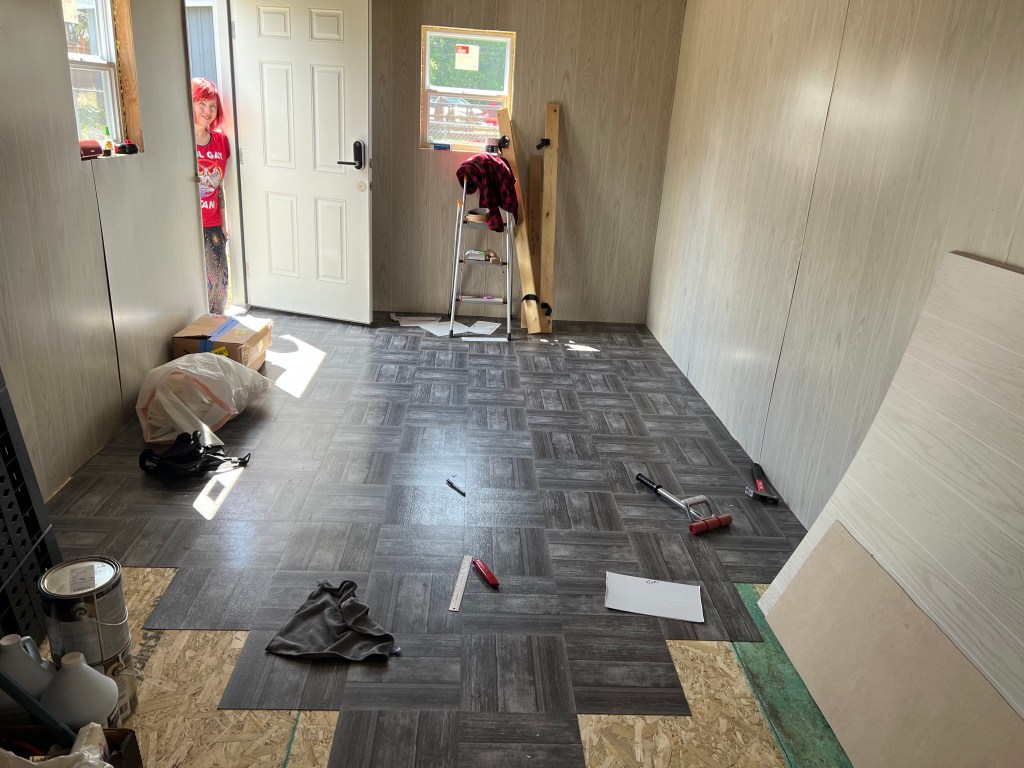
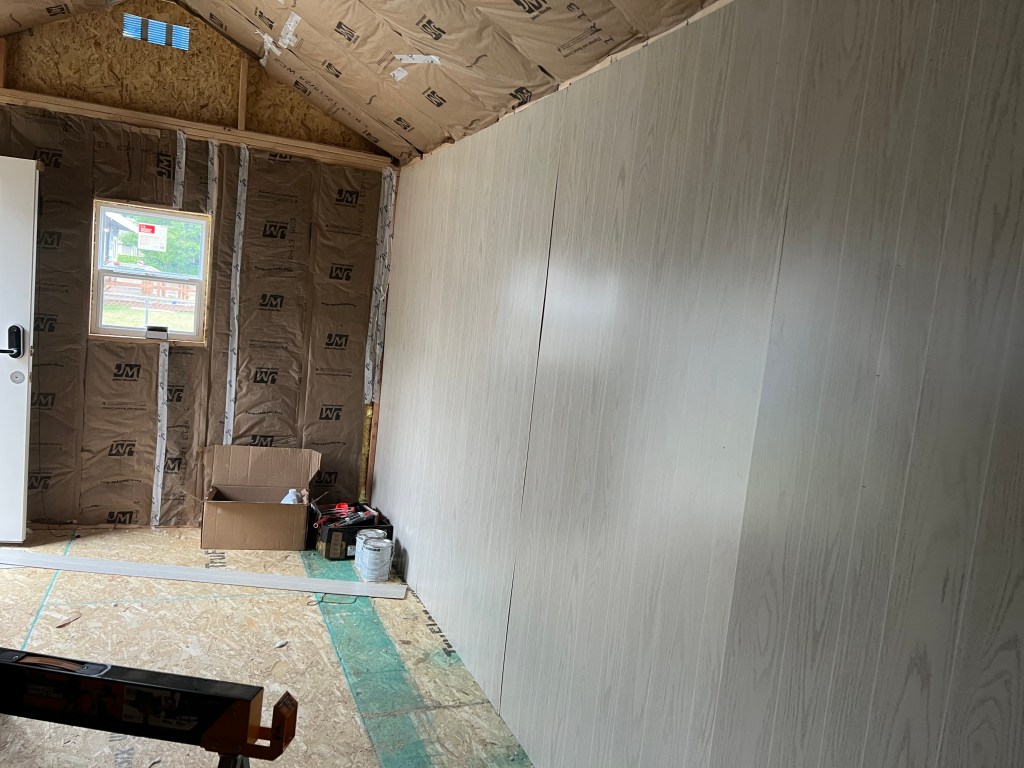
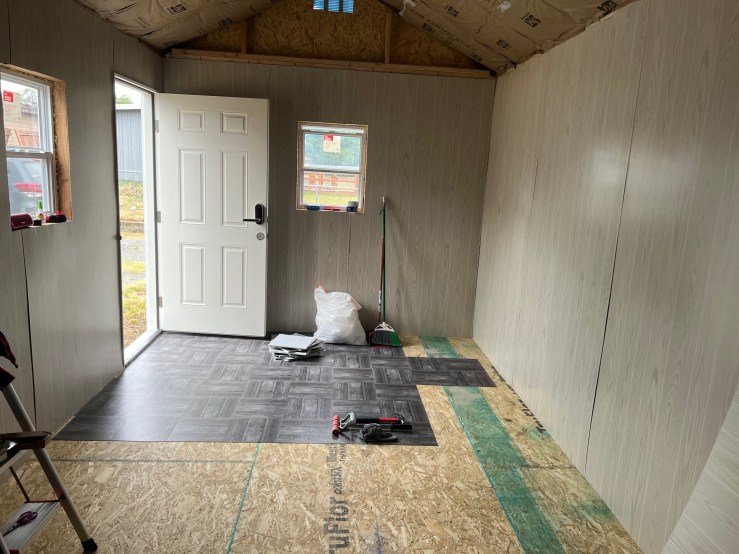
Mid flooring installation with wife.
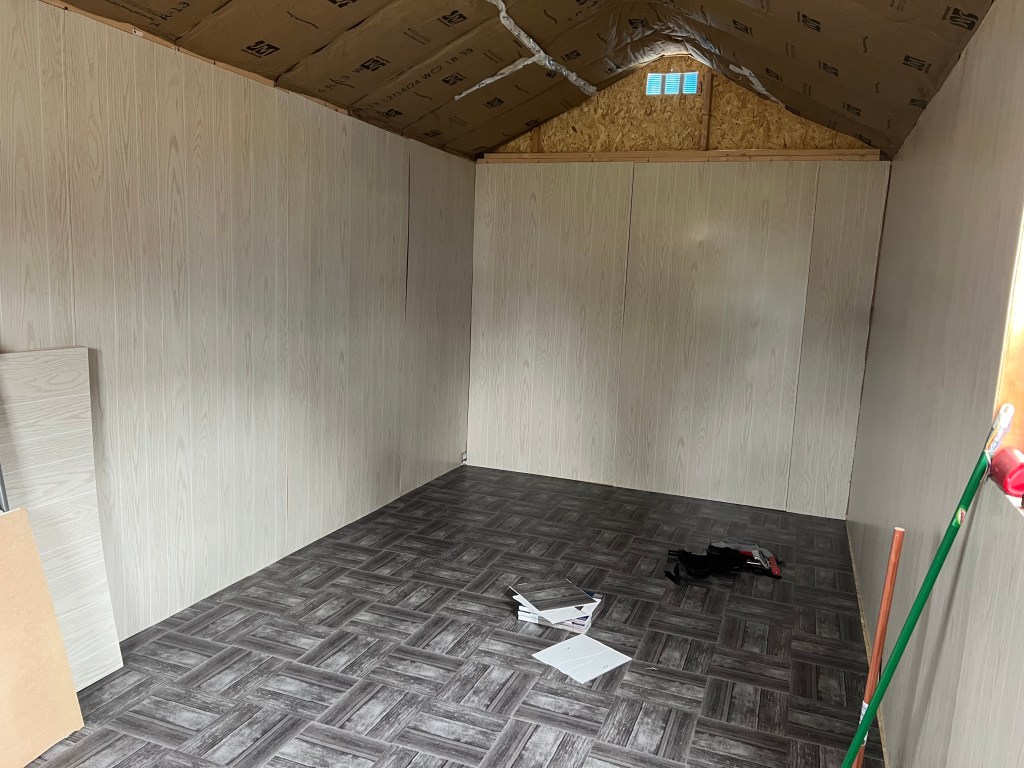
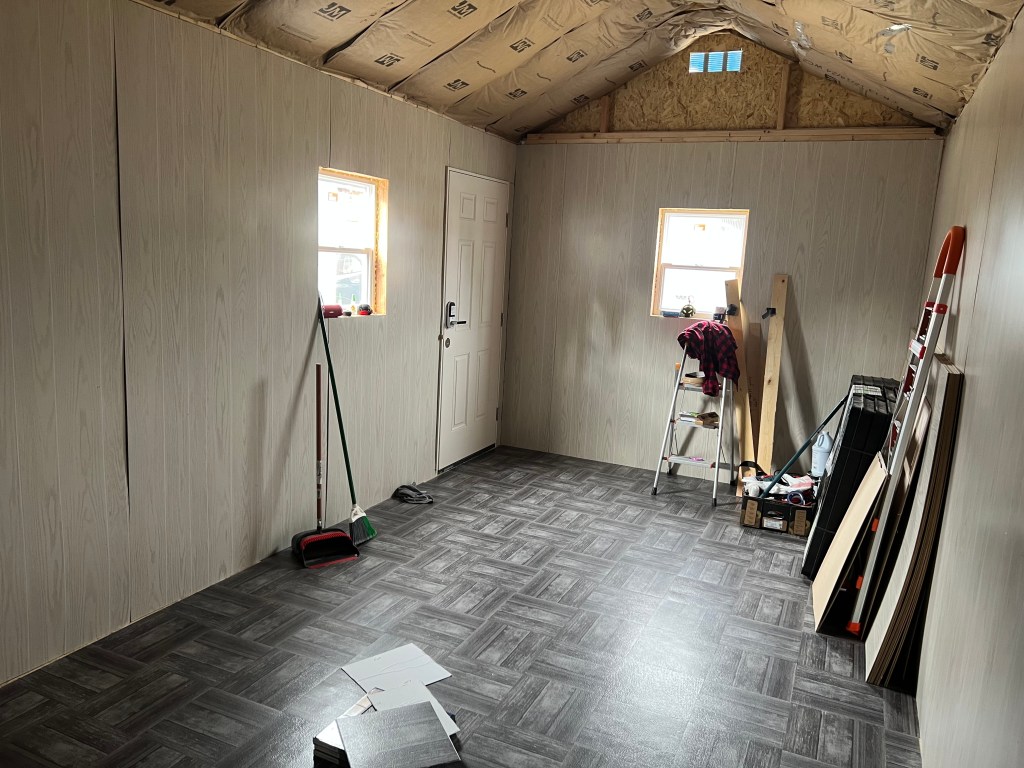
Finished Floor.
Finished back of shed.

Doing a basket weave pattern with the flooring was perfect. It really hid the cheapness of the tiles. Honestly, this was an easy installation. I did have to wear knee pads as my knees can’t take floor work that easy, but I am happy with how it came out.

The walls? That was more frustrating. Apparently you need some H channel to put paneling up, so it slots each side of the touching panels together. The H channel available at Lowes where I bought this paneling, is not for this kind of paneling, but a slightly thinner white bathroom panel. I spent days searching every corner of the internet, and I couldn’t find it. I even tried that H channel with these paneling to see if I could retro fit it between the panels. No dice.

Instead I looked for any surface stick option. I tried stick on molding. It did not stick. I tried stick on edging for MDF shelving. It did not stick. I tried superglue to help any of these options to stick. It did not stick. I used 99% isopropyl alcohol on the seams, but even so, nothing stuck.

At this point I was sure that the surface of the cheap paneling I was using was some sort of secret non stick material that NASA should be notified of. Even epoxy did not stick to it. Literally nothing stuck on the long vertical lines where the two panels met. I tried everything.

After some hair pulling and soul searching, I reminded the inner evil voice of my father that likes to tell me I am screwing up, that this was just a fucking shed, so we were going the full cheap garbage route on this. The only way to fix this the “right” way, was to rip the paneling down, recut it to ensure the edges lined up with the 16 on center studs. However, I don’t own a table saw, and the perfect line up would be impossible and there would still be an issue, likely worse where the two edges me.

Instead, I used the only item that stuck to the paneling. White Gorilla brand duct tape. No other brand of duct tape would stick. I ran a line of duct tape down each join, imperfect as it was, and then a line of duct tape along the base for the cheap stick-it molding to adhere to.
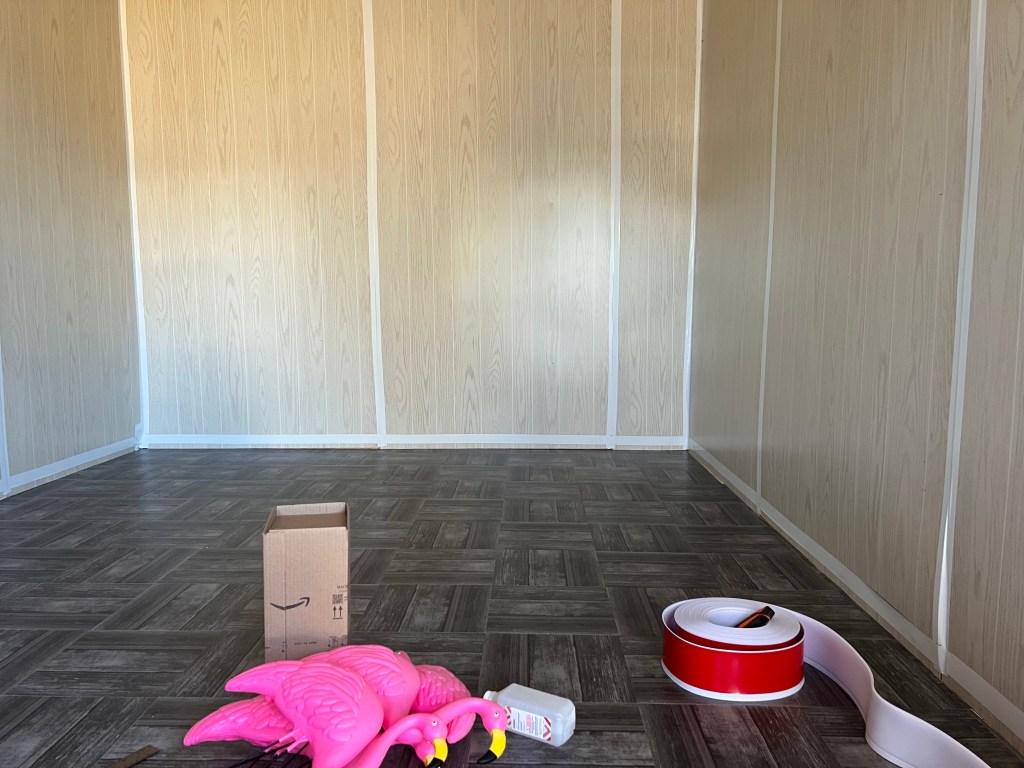
Prepped with duct tape.

This worked. I then added the big white roll of fake molding that you usually see self-stuck in bathrooms and kitchens in cheap rentals.

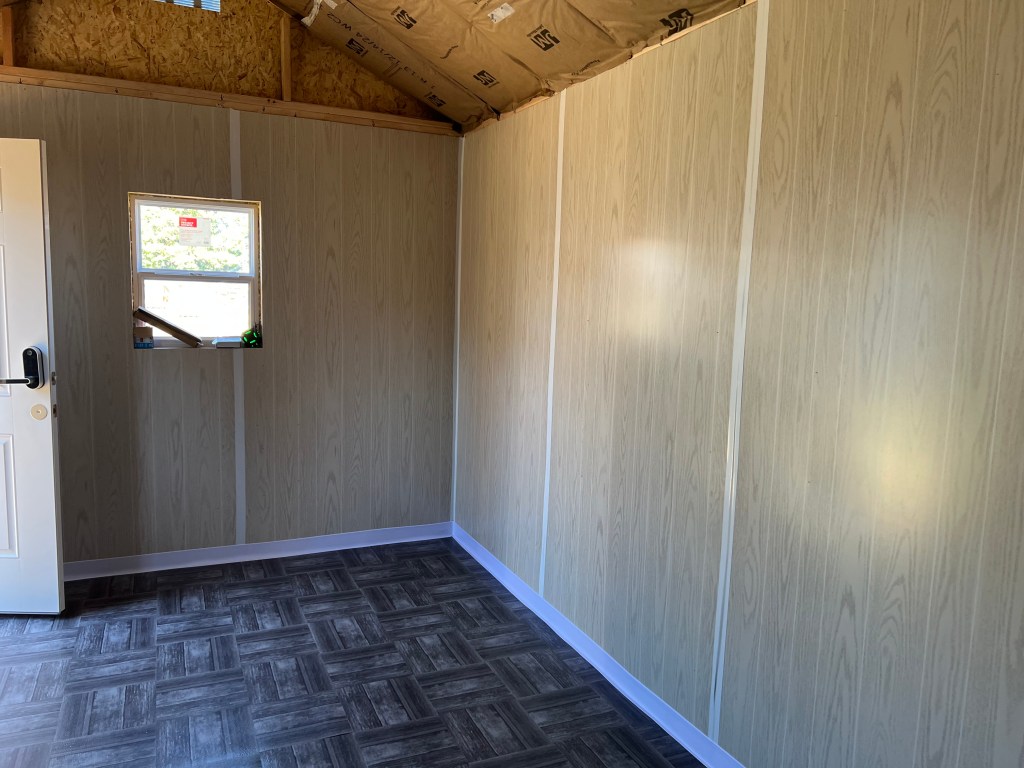
With bottom trim.
With duct tape on wall seams and the bottom trim.

While this is certainly not the right way to do things, it is a way to do it. Once I have the shelves, the circus tent top and the artificial ivy and flowers in there, I think it won’t be as noticeable. What it does do is keep things together and that Gorilla duct tape is literally the only thing on this planet that stuck to the surface of that paneling.

In all honesty, nobody is going to see it but my wife and I, and as a place to put a workout machine, a workout bike, and some storage shelves? It’s okay. I’ll live with it.
Shed Progress

Things have been coming together the last few weeks. My wife and I have kept on moving forward with the shed progress. I wish my garden was doing as well as my shed.

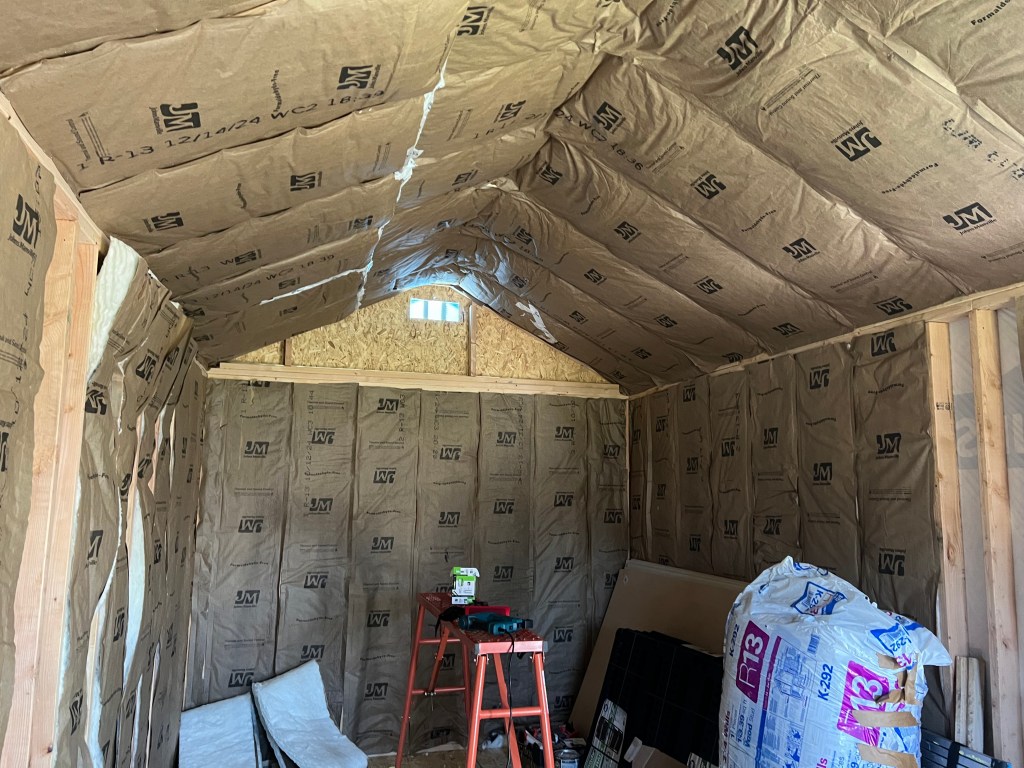
Wall insulation went well.

The wall insulation took us two days. I cut all the insulation to size from the rolls, and put it in and my wife followed me with the staple gun and stapled it in. We had to do it into two days because all the bending and place for a couple of partially disabled people was like doing an endless series of burpees. However, it went in perfectly fine. The insulation is made to fit into a 16 on center bay so it’s not a hard job at all for a DIYer.

What I found shocking was just how much the sound from the freeway we live by was deadened by the insulation. Like damn. It also kept the sun from heating the shed up too much. I am sure it will be appreciated in winter.

All insulation in.

This is all of the wall insulation in. I used Tyvek tape to tape the seams that didn’t have side insulation flaps, where we cut it thin. I also used the Tyvek tape to cover any holes we accidentally punched in the vapor barrier because we are clumsy.

On to paneling.

I was really sweating the paneling stage. I had never done it before, and I am reflexively nervous about power tools no matter how often I use them.

Turns out it was pretty easy if you have two people, and one of them is over 6 foot tall. I cut the panels to size, and we positioned it in place, and my wife staple gunned the top and I did the bottom.

I had to cut a few inches off each panel because the walls are just a hair below 8 feet tall. I cut the top off one, and used the off cut as a template to cut the rest. These super thin paneling sheets could not support their own weight on the saw horses so I had to cannibalize some of my spare wood bits from the other shed to make it work.

You will notice the seams are visible. I didn’t buy any H channels for the joins, as I didn’t realize I needed them? I had never done this before. I should have, but nope. I did not. I am still working out the joins and will probably use a self sticking 7/8″ edge band if I can get it to work. I am waiting for that to come in.

One thing that really did help was a rotozip tool. I bought a Dewalt rotozip tool (No links here are affiliate links. Just what I used.) and a ten pack of paneling cutting bits. That was amazing. I was able to just put the paneling over the window, and use the rotozip to just cut around the outside. Same for the door. I just put the paneling up, and put the rotozip on the outsize molding of the door, and boom! I was able to just cut it like butter. Highly recommended if you are going to use paneling for anything. Also, get the H channel molding for between panels. Don’t be me.

Starting the floor.

Next step is the flooring. I am just using Floor Pop brand self sticking vinyl tiles. I know these are cheap, but it’s literally just a shed. I used to live in a double wide trailer and we did this across the interior because the 1960s shag carpeting was a disaster and we were poor. They actually did a great job, and held up really well. Better than my current house vinyl floor that is slowly failing, that cost the previous home owner more.

To do this right, I first rolled on a clear coat of pre installation primer adhesive. I was worried the chip board would not be a good surface to stick to. I used Henry Liquid indoor primer. I have never used that before, but you just roll it on. It is white and watery, but dries clear in a couple hours. Very recommended. It didn’t feel sticky or weird, but it kind of sealed the wood and let the vinyl tiles stick very effectively.

I also used DAP Floor patch and leveler after watching a DIY Tiff YouTube video where she uses it on her floor when she redoes it. They are the cutest tiny DIY couple ever. I love watching her progress on her house.

The green boards in the picture above had some big chunks missing from the install that would have made the thin vinyl tiles funky, so filling it worked well. It takes 6 hours to dry, so I started the rest of the flooring and that took all my working ability for the day.

To do these vinyl self stick tiles right, you have to be on top of the dust issue. I swept every few rows, and then kept a dish rag with me, and before I placed a tile, I would sweep it of any possible debris of dust with the dish rag. Then I would really wedge the edges together and kind of roll the tile into place. Then I used a floor roller to really make it adhere. The floor roller is cheap and worth your money. I also kept a hammer to pound down nails that stuck up a bit too much.

Tools and tiles.

I chose to do kind of a basket weave with these stick-it’s because if you run the tiles in the same direction, it doesn’t quite line up, and looks cheaper than if you do it as a basket weave.

I do plan to fix the tall end corner bits on the wall with the vents, but I don’t have any 2×4’s on hand. I’ll just wait on that bit until the second shed is in, and I order supplies for it, so I can pay the Lowe’s deliver fee just a single time. I have to create a 16 on center 2×4 situation up there so I can insulate that as well.

Overall, I feel like this is really starting to come together. I still need a ramp to the door, and to do the gravel around the outside as a boarder, and the panel joins and corner molding bits. However, this is coming to a close and I can see the project’s finish in sight.

Philosophically, this is a different kind of house project from what I am used to. When I was much younger, I’d have had this done in a couple of weeks. I’d have spent 12-16 hour days just plugging along, but now my body doesn’t let me.

That is kind of forcing me to accept my limitations. Like yesterday I started the flooring, and I didn’t feel like I did much, but boy howdy did I feel being on the floor that long. I’ll just keep plugging along and eventually it will be done.

Cutting a hole in my wall for cables.

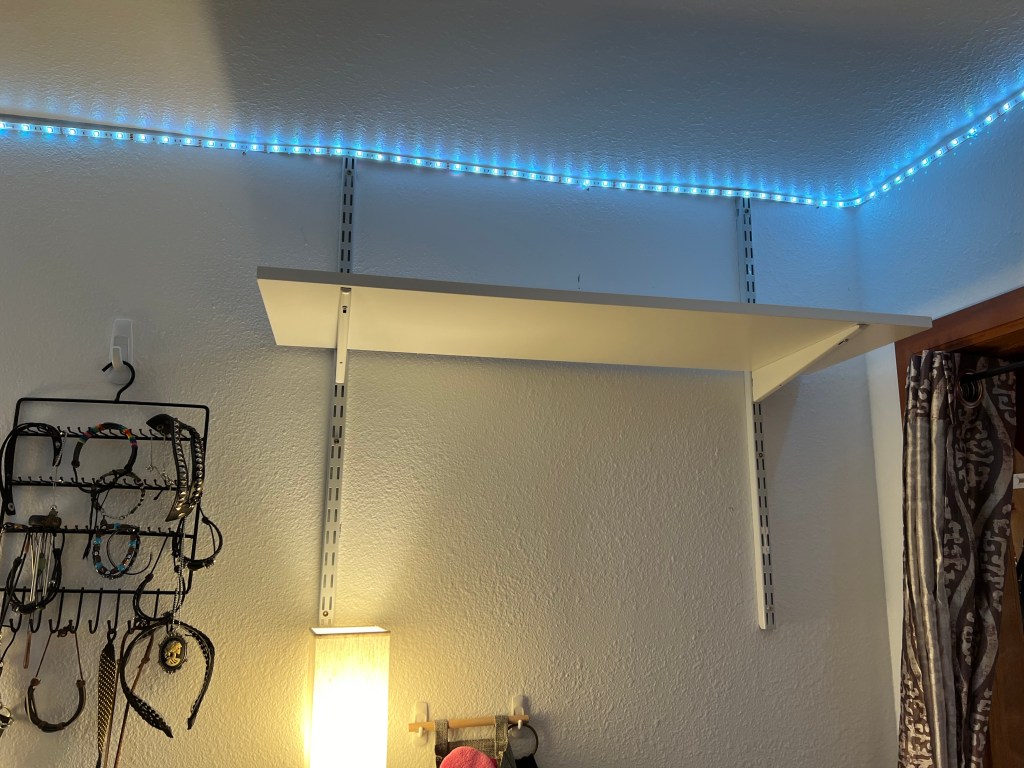
Remember that shelf I put up for the router and modem?

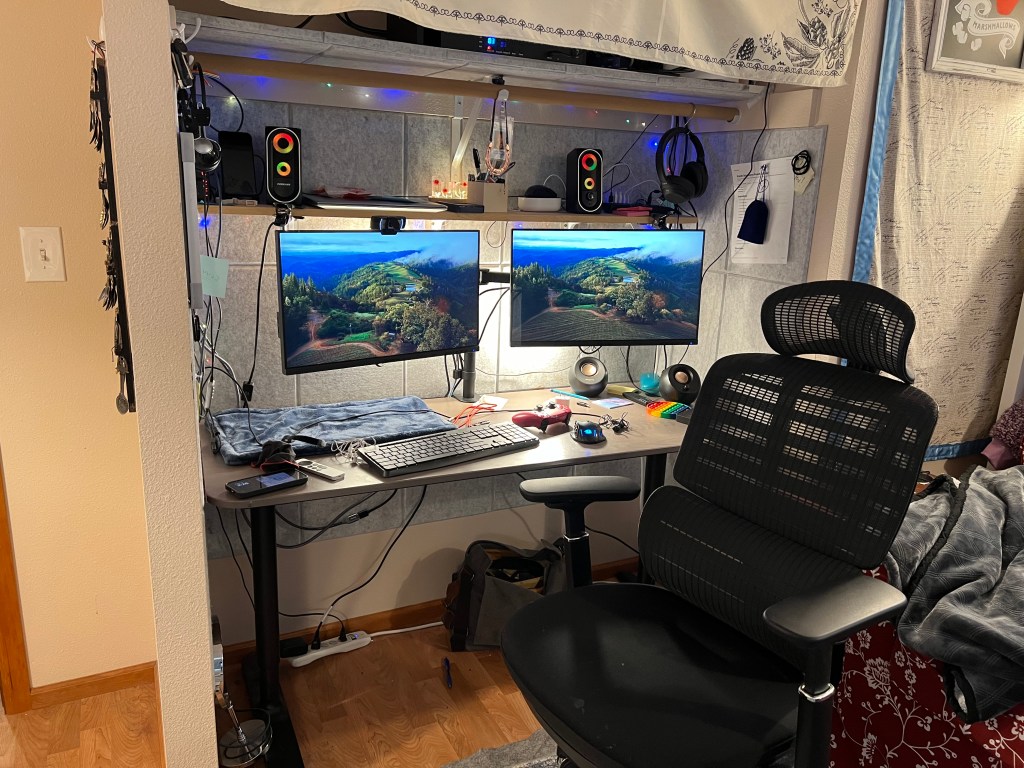
On the exact opposite side of the wall is my wife’s workspace. Our living room is actually the front bedroom in the house as we live in 899 square feet, and it’s not a huge place. My wife has her desk literally in the bedroom closet, and it’s worked out great for soundproofing for her video creation.

My wife’s desk.

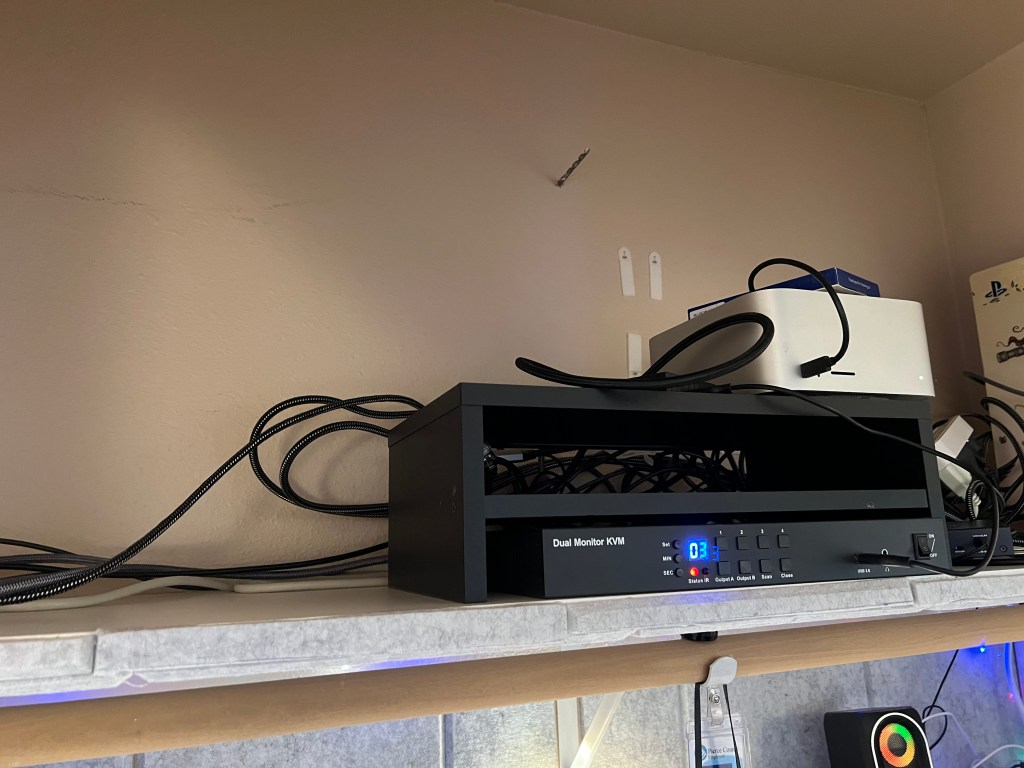
The top shelf is where she keeps her gaming PC, and KVM switch, and all the other wired things. We wanted to punch a hole between the modem and router shelf in that room into the top shelf of my wife’s workspace in our living room.

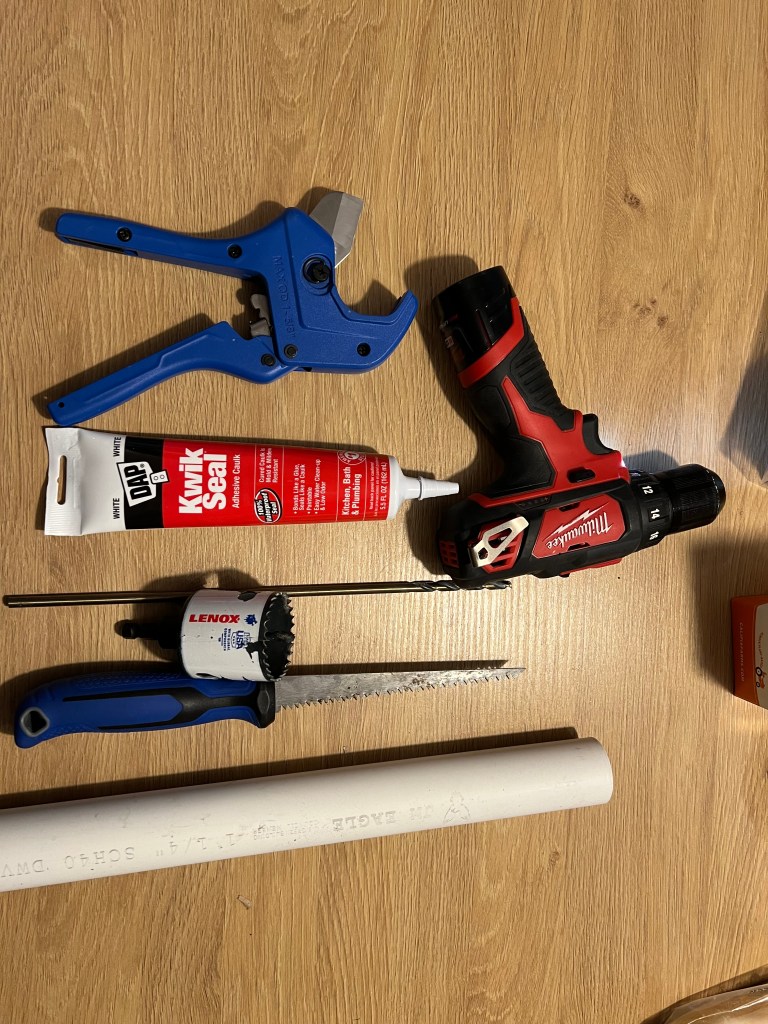
Needed Tools.

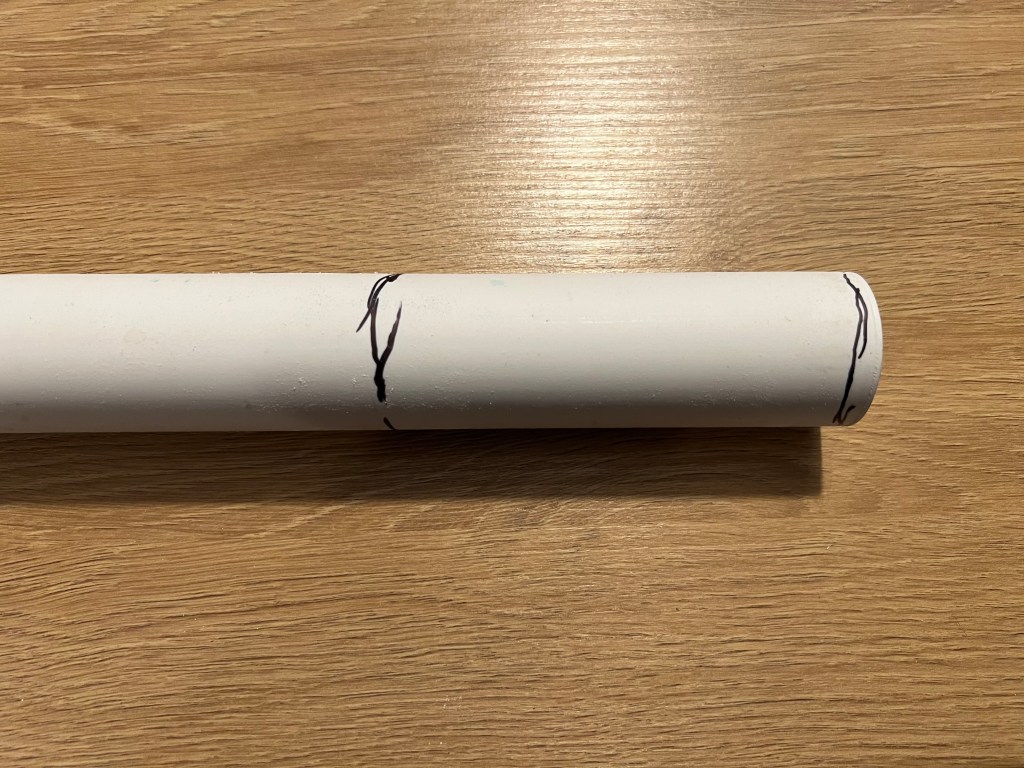
The plan is to use a long drill bit to drill a guide hole, then use that to use a large hole bit to drill into each side, then put in a 1.25″ PVC pipe, cut it off, and use paintable caulk to glue it in. it’s pretty easy, and you don’t need much to do it. PVC is easy to work with, and can be cut with a hand tool, and the drill bits were not expensive.

Drilling with an extra long drill bit to make a pilot hole between both sides of the wall.

I knew where the studs were already from hanging the shelves, so I just put the hole along side the stud.

Drill bit sticking out of the other side of the wall.

The long drill bit creates the hole so you can use it to line up the hole bit, and it will match on both sides.

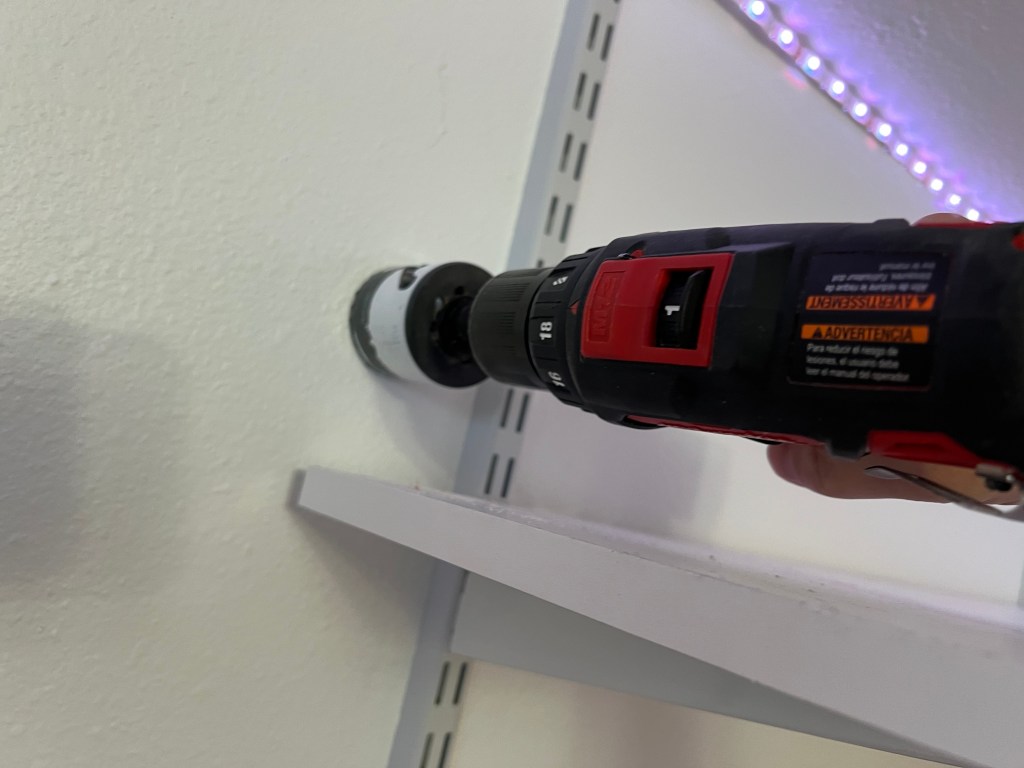
Using a hole bit for my drill.

It’s important to drill the hole in from the outside, on both walls. That way if you have any blow out, it will be in the interior of the wall. It just gives a cleaner round hole to work with.

PVC Pipe to put in the hole.

I didn’t want to just have a hole in the sheetrock. I was worried cable and cord movement would degrade the sheetrock in the wall over time and I didn’t like how it looked to just see inside the wall. Not to mention I didn’t need anything important falling into the wall, where I’d have to rip it apart to get it out later.

The PVC pipe was a good solution for me, as it could be just caulked in, and would protect the sheet work, and keep me from dropping anything in the wall.

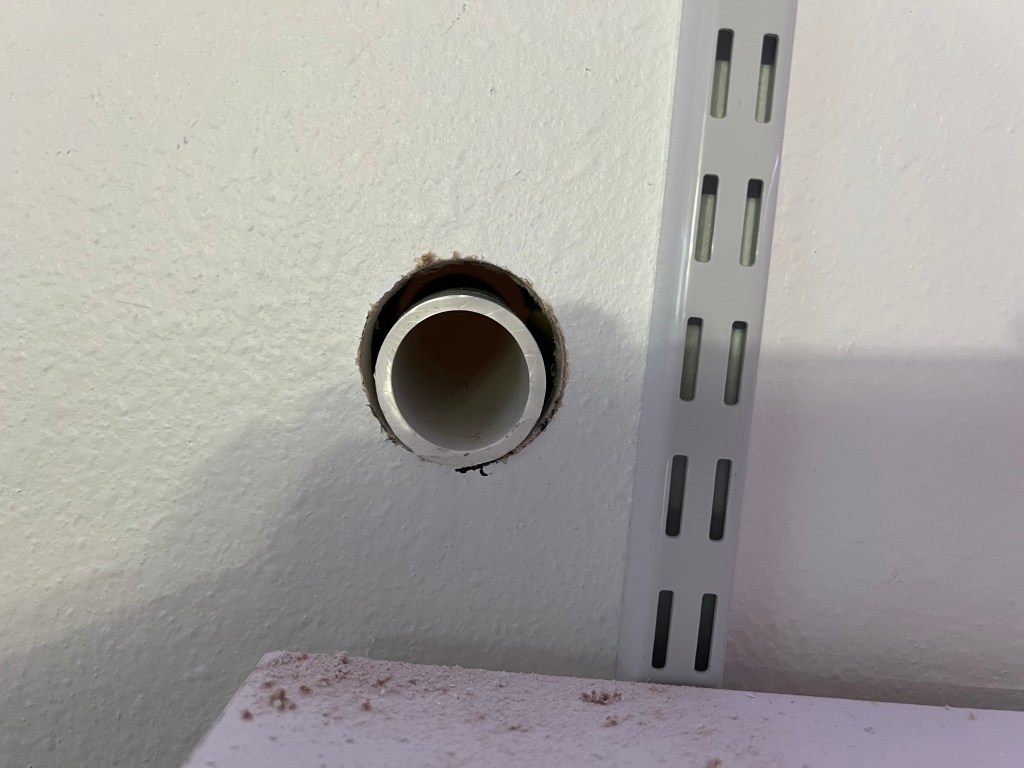
PVC in the hole of the wall.

This is where I realized, I had grabbed my larger sized hole saw, and had a full on panic that it would not work well. The last time I did this, I had the exact hole size as the PVC, and it was a bit more slick, but this worked too with enough paintable caulk.

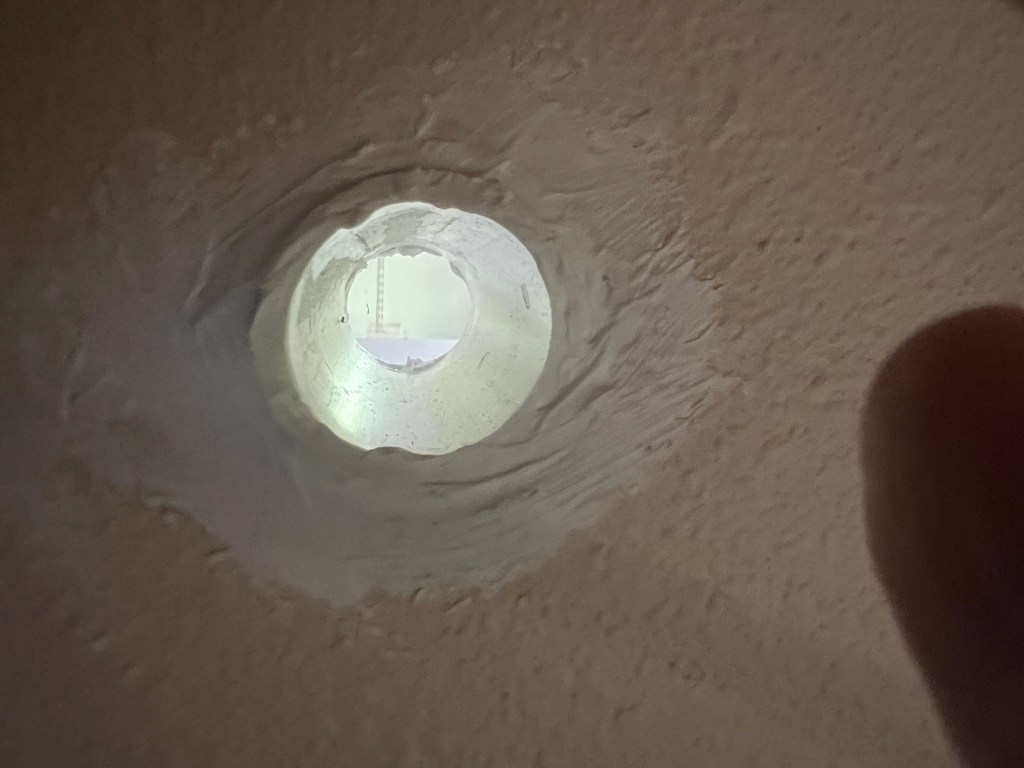
Caulked in PVC pipe so you can run cables from the other room.

I just caulked it in with a bit of extra caulk. This is still wet in the above picture. It needs sanded down, but I am lazy, and I’ll sand it down when I go to repaint that room.

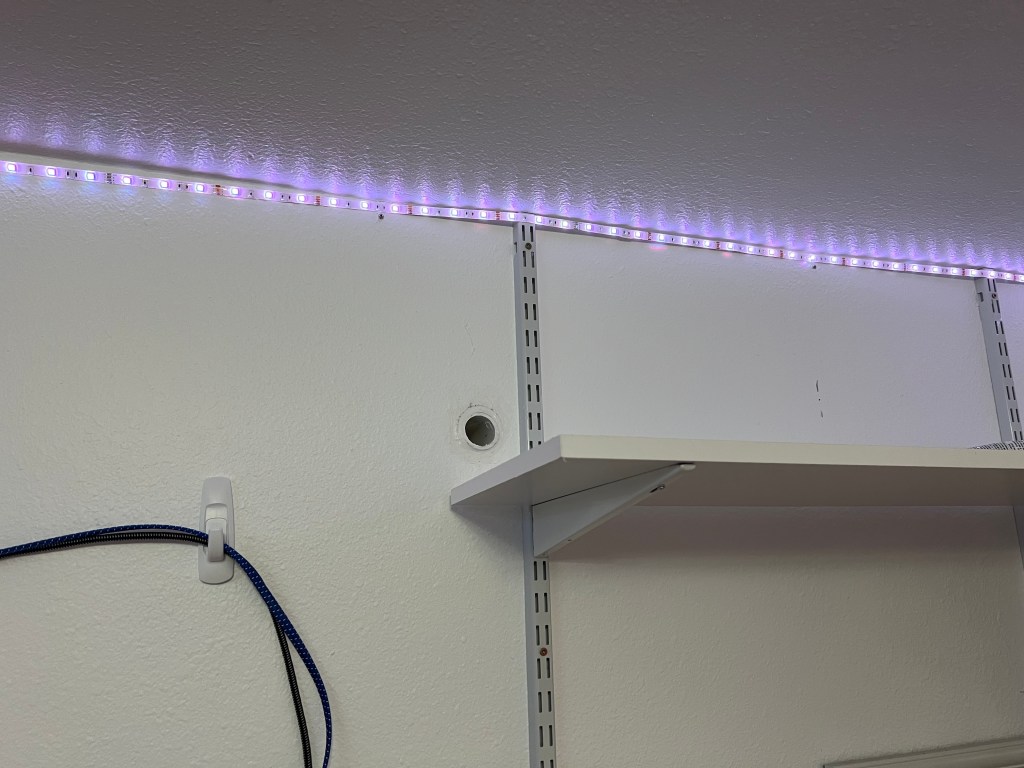
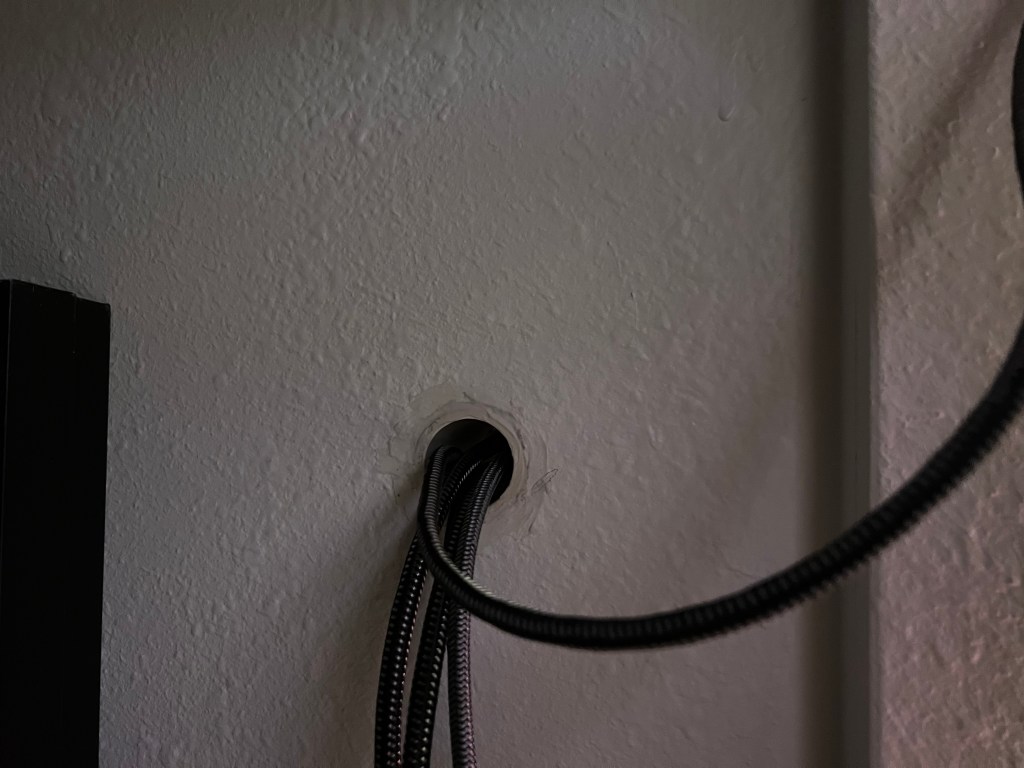
Finished hole into my wife’s work space.
Cables in another cord run from one closet to the other.

It actually worked out really well. My wife likes to wire her computer gear in instead of using the wifi, so she can now do that without running cables around the doors into the other room.

I know there are some grommets you can buy, but they didn’t extend through the wall and only were on the surface, like a desk grommet for wires. I also have exceptionally thin walls in this circa 1910, so an out of the box solution probably wouldn’t fit my house.

They do need a little sanding and painting, but that’s for another day. I am just happy my wife’s workspace set up and be organized the way she likes it.